

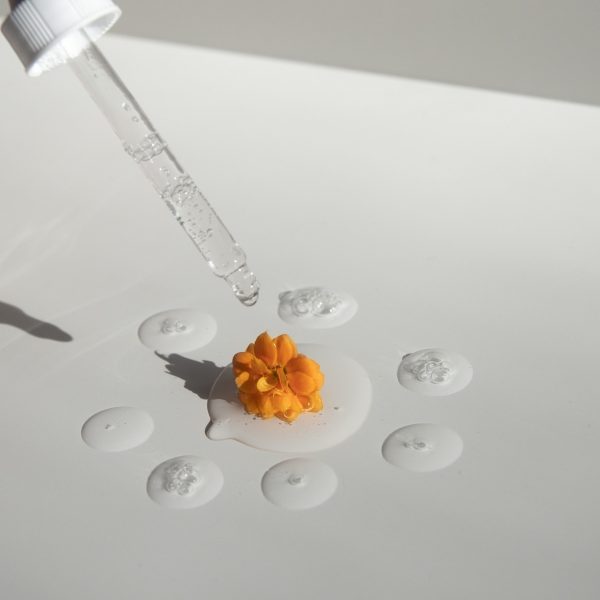
Charting the cyclical changes of a woman’s cervical fluid (also called cervical mucus) is a powerful tool for increasing the odds of conception. Fertile cervical fluid plays a fundamental role in conception, by assisting in the transportation of the sperm into the uterus and fallopian tubes, as well as nourishing and supporting the sperm until it reaches the egg. It has the ability to keep sperm alive for up to 5 days.
Cervical fluid is produced by crypts that are located in the walls of the cervix. There are several types of crypts that produce different types of fluid. The consistency and quality of the fluid changes throughout the menstrual cycle in response to which ovarian hormone is dominant. Early in the cycle, following menstruation, the cervix generally does not produce much fluid. But as a woman approaches ovulation, estrogen rises and causes the cervix to produce fertile cervical fluid, which is slippery, elastic, and generally transparent. The slippery quality of cervical fluid is the clearest indicator that it is fertile. At the peak of fertility, the texture will be comparable to egg whites – very slippery, and you will be able to stretch it between your fingers.
After ovulation, progesterone rises and causes the cervix to switch to the production of non-fertile fluid, which is not friendly to sperm. Non-fertile fluid can be sticky, tacky or creamy (similar in appearance to hand lotion). This type of fluid creates a protective barrier for the cervix and uterus. During pregnancy, it is this fluid that will form the mucus plug at the opening of the cervix, sealing off the uterus from the vagina.
How do I chart my cervical fluid?
To observe these changes, a woman must check herself twice daily, starting at the end of her period, and continuing until the end of the fertile patch. To do this, she inserts a clean finger inside the opening of the vagina. She then rubs her fingers together to check the consistency of the fluid, noticing whether it is sticky, slightly wet, or slippery. It is also important to note the color and appearance of the fluid. Fertile fluid is generally more or less transparent, watery in consistency, abundant, and very slippery. As mentioned above, the most fertile fluid is referred to as egg-white fluid for its ability to be stretchy and elastic.
It is important to note that cervical fluid is not the same thing as arousal fluid, which is produced inside the vagina, not inside the cervix. Although arousal fluid can be clear and slippery, not unlike fertile cervical fluid, it has a different structure and is unable to transport and sustain sperm. In order not to confuse the two, a woman should not observe her cervical fluid while aroused, or immediately following intercourse. Semen can also mask the appearance of cervical fluid.
How can charting my cervical fluid help me conceive?
The information gleaned from fertility charting is so accurate that there are entire systems of natural family planning based either entirely, or in part, on the observation of cervical fluid patterns. Sympto-thermal methods of charting, such as the Fertility Awareness Method, combine the observation of cervical fluid with basal body temperature and observation of the cervix. The Billings Ovulation Method relies exclusively on cervical fluid. Studies have shown that these methods are all highly effective methods of contraception, with effectiveness rates of 99.6% and above. One study of the Billings Ovulation Method even showed a 100% effectiveness rate! This proves that charting cervical fluid is a highly accurate way of pinpointing the fertile days of a woman’s cycle, which can allow couples who are trying to conceive to use this information to their advantage.
There are several studies that have proven the effectiveness of timing intercourse according to cervical fluid. One study found that,
And yet another study found that…
How can I identify my peak fertility day?
The peak fertility day is the last day of slippery, fertile cervical fluid. It is often the day where there is the highest quantity of the most fertile cervical fluid (egg white fluid), but not always. In a regular cycle, the patch of fertile cervical fluid can last anywhere from 2 to 6 days. For most women, the fertile patch ends on the day of ovulation, but it is also possible for it to end 1 or 2 days before ovulation. This is why charting daily is important, and can prove more effective than timing intercourse based on the day of ovulation, or on the surge of luteinizing hormone (as detected by an Ovulation Predictor Kit).
To maximize the odds of conception, a couple should have intercourse on all the days where fertile cervical fluid is detected. A woman that is experienced in fertility charting may detect her peak day as it is happening, but it is generally only confirmed on the following day when her cervical fluid changes in consistency and returns to a non-fertile, sticky, or tacky state. Charting both cervical fluid changes and basal body temperature is the best way to confirm that ovulation has occurred.
- Price, M. (n.d.). Billings LIFE: Official Site of The Billings Ovulation Method™ – Leaders in Fertility Education. Retrieved from: http://www.thebillingsovulationmethod.org/
- Scarpa, B., Dunson, D. B., & Colombo, B. (2006). Cervical mucus secretions on the day of intercourse: An accurate marker of highly fertile days. European Journal of Obstetrics & Gynecology and Reproductive Biology, 125(1), 72-78. doi:10.1016/j.ejogrb.2005.07.024. Retrieved from: https://www.ejog.org/article/S0301-2115(05)00411-2/fulltext
- Owen, M. (2013). Physiological Signs of Ovulation and Fertility Readily Observable by Women. The Linacre Quarterly, 80(1), 17-23. doi:10.1179/0024363912z.0000000005. Retrieved from: https://www.ncbi.nlm.nih.gov/pmc/articles/PMC6081768/
- Weschler, Toni. (2006) Taking Charge of your Fertility, 10th anniversary edition. Collins.
- Fehring, R. J. (2002). Accuracy of the peak day of cervical mucus as a biological marker of fertility. Contraception, 66(4), 231-235. doi:10.1016/s0010-7824(02)00355-4. Retrieved from: https://www.contraceptionjournal.org/article/S0010-7824(02)00355-4/fulltext
- Evans-Hoeker, E., Pritchard, D. A., Long, D. L., Herring, A. H., Stanford, J. B., & Steiner, A. Z. (2013). Cervical mucus monitoring prevalence and associated fecundability in women trying to conceive. Fertility and Sterility, 100(4). doi:10.1016/j.fertnstert.2013.06.002. Retrieved from: https://www.ncbi.nlm.nih.gov/pmc/articles/PMC3787999/